
Skip to content

Rhoda Fleming · REALTOR® · REAL Broker · Gwinnett County, GA

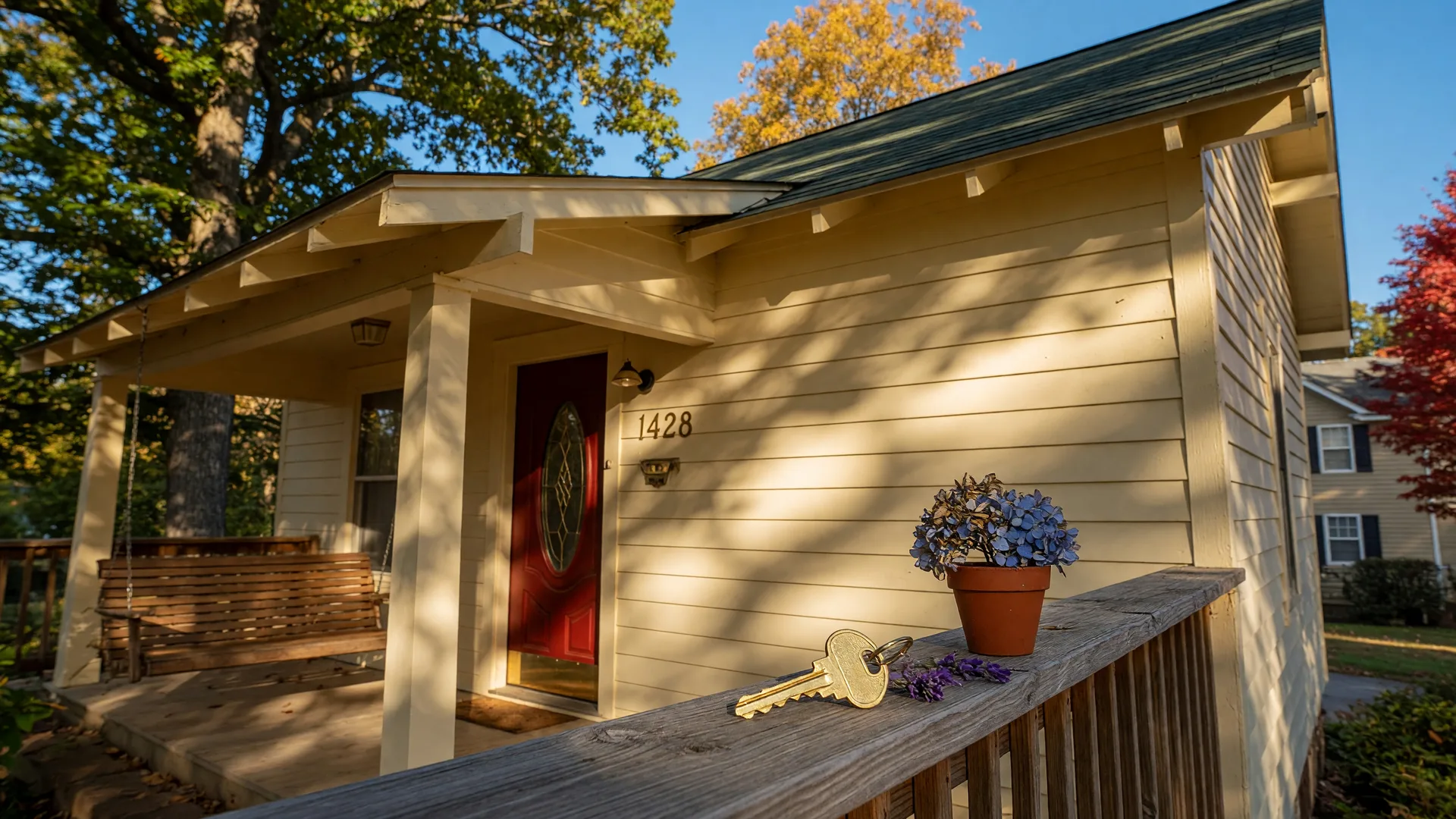
A cream-colored craftsman starter home's front porch on a bright October morning, a brass house key resting on the wooden railing, warm golden light across the siding
The Journal · First-Time Buyer Gwinnett County, Georgia · 2026

The Gwinnett Journal

First-Time Home Buyer in Gwinnett County: Down Payment Help and the Buying vs Renting Math

Rhoda Fleming, REALTOR with REAL Broker

Rhoda Fleming

REALTOR® · REAL Broker

2026-10-22 9 min read

Is 2026 a good year to buy your first home in Gwinnett County? The verified numbers say it is a genuinely fair one, and today's first-time buyers have more help than most expect. Gwinnett's median home sale price sat near $409,000 in the September 2026 three-month window, down about 1.9 percent year over year (Redfin), while the average 30-year fixed mortgage rate measured 7.40 percent on October 15, 2026 (Freddie Mac). Median rent across the county runs near $1,800 a month, so the rent-versus-buy question is a real one this season. And on the assistance side, Georgia Dream can cover up to $12,500 of a first home, the county's own Homestretch program adds up to $10,000, and the Gwinnett Housing Corporation's Welcome Home program holds a soft second mortgage up to $60,000.

This is the first-time chapter of the Gwinnett relocation journal, written from Rhoda Fleming's nineteen years selling Metro Atlanta and a home base in Grayson. Every rate, price, program limit, and comparison below carries a named source and date from the current market, and where a number moves (rates and medians shift weekly) the date is labeled. The goal is not a list of programs; it is the honest math: what a first Gwinnett home costs per month, how the state and the county help pay for it, and which buyers should rent a little longer while which buyers should buy now.

Verified 1
~$409K
Gwinnett median home sale price, September 2026 three-month window, down about 1.9% year over year (Redfin); Zillow average home value ~$409K in July 2026
Verified 2
7.40%
average 30-year fixed mortgage rate, Freddie Mac survey of October 15, 2026; the 15-year averaged 6.71%
Verified 3
$12,500
maximum Georgia Dream down payment and closing cost help (PEN and Choice tiers, 6% of price); $10,000 Standard at 5% (Georgia DCA, 0% deferred second)
Verified 4
$60,000
top Welcome Home soft second mortgage from the Gwinnett Housing Corporation, 1% interest with no payments while the home is your primary residence

The Fit

Who first-time buying in Gwinnett fits

Renters with steady income

A stable paycheck plus a credit score of 640 or better is most of the qualification story. The majority of Gwinnett first-time buyers are renters today who convert when the math, and the assistance, line up.

Budget-first buyers

The assistance stack does the heavy lifting: Georgia Dream up to $12,500 and Gwinnett's Homestretch up to $10,000 can cover most of a 3 to 5 percent down payment on an entry-price home.

Starter-home shoppers

Entry cities sit below the county median: Lawrenceville and Snellville hold some of the most accessible first-home prices in Gwinnett, with Dacula and Grayson a step up for trade-in buyers.

Long-horizon families

If you plan to stay five years or more, buying builds equity while rents keep climbing. The school clusters are the tiebreaker for most families, and they decide the address before the price does.

The Honest Part

Where the first-time math gets honest

  • The monthly payment at today's rates is real. At the ~$409,000 median with 5 percent down, principal and interest alone run near $2,700 a month; add property taxes, insurance, and HOA dues and the all-in payment lands around $3,200, against a median rent near $1,800. If that payment strains your budget, more down payment or a lower rate changes the story.

  • The assistance programs carry caps. Georgia Dream has income limits ($137,555 for a one- or two-person household, $158,188 for three or more) and a $625,000 purchase price ceiling, and Homestretch targets buyers at or below 80 percent of area median income. Earning above the caps does not disqualify you from owning, it just removes the subsidy.

  • Renting is currently cheaper month to month in Gwinnett. A February 2026 analysis of the metro's local numbers found renting takes a smaller share of income than owning right now (Hank Bailey Realty), driven by elevated prices relative to wages. Buying only wins if you plan to stay long enough to build equity and beat rent growth.

  • Selling within a few years erases the equity. Closing costs run roughly 2 to 5 percent of the price on the way in, and the seller's side of a later resale has its own costs. A move out of Gwinnett inside three or four years can leave a first purchase behind versus renting.

  • Skipping the preparation is the expensive mistake. Georgia Dream requires DCA-approved homebuyer education, and a pre-approval before you tour keeps you honest about the payment. The families who walk in cold pay list price and learn the process after closing.

Not sure which camp you are in? That is the fastest 30 minutes you will spend on this move. Book a consultation with Rhoda and bring your commute, your school zone, and your budget.

Section 01

The 2026 snapshot: prices, rates, and what they mean

Start with the county number so the city detail lands in context. Gwinnett's median home sale price measured about $409,000 in the three months ending September 2026, down roughly 1.9 percent year over year (Redfin), and Zillow's average home value was about $409,000 as of July 2026. For a first-time buyer that gentle softening matters: it is the difference between bidding against a crowd and negotiating. The cost of living guide sets the full budget frame, and the commute guide sets the calendar frame.

The rate is the other half of the payment. The average 30-year fixed mortgage rate was 7.40 percent in Freddie Mac's October 15, 2026 survey, with the 15-year at 6.71 percent. That is up from 6.27 percent a year earlier, which is exactly why the monthly math below leans on a real, dated rate rather than a generic assumption. Rates move weekly, so treat every payment here as an illustration to re-run with today's quote.

Price and rate together explain the county's spread: a roughly $409,000 median with a 7.4 percent rate, entry cities like Lawrenceville and Snellville below the median, and Suwanee's North Gwinnett zone and Buford's city-school line well above it. That spread is the whole cities guide in one sentence.

Section 02

The assistance stack: Georgia Dream first, then Gwinnett's own programs

The first rung is the state. Georgia Dream, run by the Georgia Department of Community Affairs, pairs a 30-year fixed first mortgage with a 0 percent interest, deferred-repayment second mortgage for down payment and closing costs, repaid only when you sell, refinance, or stop using the home as your primary residence. Standard assistance is 5 percent of the purchase price or up to $10,000; the PEN tier (protectors, educators, and nurses) and the Choice tier (a household member with a qualifying disability) go to 6 percent or up to $12,500. Eligibility requires first-time buyer status, a credit score of 640 or better, household income within limits ($137,555 for one or two people, $158,188 for three or more), a purchase price at or below $625,000, and completion of DCA-approved homebuyer education (Georgia DCA, loan matrix current as of July 2026).

Then the county adds its own rungs. Gwinnett County's Homestretch program offers up to $10,000 in down payment and closing cost help as a 0 percent, five-year deferred loan with no monthly payments, for first-time buyers at or below 80 percent of area median income buying within county price limits. Separately, the Gwinnett Housing Corporation's Welcome Home program sells fully renovated and newly constructed affordable homes and holds a soft second mortgage of up to $60,000 at 1 percent interest, with no payments while you live there, for first-time buyers at or below 80 percent of area median income who live or work in Gwinnett (Gwinnett County Housing; Gwinnett Housing Corporation).

How the stack works in practice: on an entry-price home, Georgia Dream's $10,000 to $12,500 can cover a 3 to 5 percent down payment outright, and the county's Homestretch $10,000 can cover closing costs. Buyers rarely need to reach into savings for both. Programs change terms and funding windows, so verify the current caps with a participating lender before you budget around them, and pair this with the first-time buyer guide for the full path.

Section 03

What the monthly math actually looks like

Run the county median through today's numbers and the payment is easy to see. On a $409,000 home with 5 percent down (about $20,450), a $388,550 loan at the October 15, 2026 average of 7.40 percent works out to roughly $2,700 a month in principal and interest. Add property taxes, homeowners insurance, and typical HOA dues and the all-in payment lands near $3,200 a month. That is the number to test against your take-home pay, not the listing price.

Now compare the rent side. Median rent in Gwinnett County runs near $1,800 a month (a typical 1-bedroom around $1,500 to $1,650, a 2-bedroom around $1,765 to $1,830, and 3-plus-bedroom units near $2,200 to $2,500), and HUD's 2025 fair market rent for a 2-bedroom in the county is $1,830. Renting is currently cheaper month to month, and a February 2026 analysis of the metro's local numbers found renting takes a smaller share of income than owning right now (Hank Bailey Realty).

So why buy at all? Because the monthly comparison misses the equity. A fixed-rate mortgage locks your housing payment for three decades while rents reset every lease, and every payment moves equity in your favor. The rule of thumb that survives the analysis: if you expect to stay in Gwinnett five years or more, buying at the median builds wealth that renting does not; if your horizon is under three or four years, renting is probably the smarter, cheaper move. The relocation checklist helps you decide before the lease renewal forces the issue.

Section 04

The down payment and closing cost checklist

You do not need 20 percent down. FHA loans allow 3.5 percent down, many conventional loans allow 3 percent, the U.S. median down payment for first-time buyers is about 10 percent, and Georgia buyers overall average around 12 percent. On a $409,000 median, 3 percent is about $12,300, comfortably within Georgia Dream's assistance range for an eligible buyer (FHA; LendingTree; Bankrate).

Closing costs are the line first-time buyers forget. Georgia closing costs typically run 2 to 5 percent of the purchase price, roughly $6,000 to $15,000 on a $300,000 home, and Georgia requires a licensed attorney at closing plus a mortgage recording tax (Rocket Mortgage; LendingTree). The same assistance stack covers these: Georgia Dream's second mortgage and Gwinnett's Homestretch are explicitly for down payment and closing costs, which is why the combined programs can drop a buyer's cash-to-close to a modest personal contribution.

Assemble the proof before you shop: two years of tax returns, W-2s, pay stubs, bank statements, and any gift letters. The DCA education requirement and the 28 percent front-end and 36 to 45 percent back-end debt ratios mean lenders verify everything, and the faster the file is ready, the faster a pre-approval turns into an accepted offer in a balanced market.

Section 05

Where the entry points are in Gwinnett

The county's affordability spread is a first-time buyer's friend. Lawrenceville, the county seat, is the most affordable of the major cities and anchors the county's civic, cultural, and employment core. Snellville delivers the storied Brookwood cluster at a value step below the northern tier. Dacula stretches the dollar on larger lots with golf-community amenities, and Grayson, Rhoda's home base, is the classic move-up market when a first home is a springboard rather than a final stop.

The two decisions that sort the list are school and commute. The schools guide maps the clusters so you shop the feeder zone, not just the city, and the commute guide sets the drive-time budget. The city profiles combine both into the address you actually want, and the best places guide ranks the cities the way the rankings see them.

Section 06

Rhoda's path from pre-approval to closing

The sequence that works in Gwinnett's balanced market is consistent. First, get pre-approved and run your numbers against Georgia Dream eligibility, since the assistance changes the price band you can afford. Second, choose your school zone and commute budget before you tour. Third, shop the entry cities with an agent who knows which listings are priced to move. Fourth, complete the DCA-approved homebuyer education, which Georgia Dream requires and which genuinely improves the outcome. Fifth, negotiate with the seller's disclosures and a home inspection in hand. Sixth, close with a licensed Georgia attorney.

Rhoda has guided relocations across Metro Atlanta for nineteen years from her Grayson home base, and she works every step of that sequence with first-time buyers: the first-time buyer guide is the written companion, and georgiasluxuryhomes.com carries the current portfolio. Bring your income, your credit picture, and your timeline to a consultation and she will tell you which Gwinnett city, which program, and which price band fit, honestly, including whether to rent a little longer.

My favorite kind of client is the first-time buyer, because the first house is where a whole family's future gets set. I have watched nineteen years of Gwinnett first purchases, from Lawrenceville starters to Grayson trade-ups, and the 2026 truth is encouraging: prices have softened about two percent, the state and the county are both handing out real down payment help, and the families who win are the ones who show up with a pre-approval, a school zone, and honest buy-versus-rent math. Bring me those three things and I will tell you the rest, including the hard part, which is whether to rent another year. That is the advice most agents will not give you, and it is exactly why you should.
Rhoda Fleming, REALTOR with REAL Broker

Rhoda Fleming

REALTOR® · REAL Broker · Grayson, GA

Straight Answers

The questions buyers actually ask

How much do I need for a down payment on a first home in Gwinnett?

As little as 3 percent down on many conventional loans or 3.5 percent on FHA, about $12,300 to $14,300 on Gwinnett's ~$409,000 median (Redfin, September 2026). Georgia Dream covers up to $12,500 for eligible buyers, and the county's Homestretch program adds up to $10,000, so qualified buyers often bring only a modest personal contribution.

What is the Georgia Dream program?

A Georgia Department of Community Affairs program that pairs a 30-year fixed mortgage with a 0 percent interest, deferred second mortgage for down payment and closing costs: 5 percent or up to $10,000 (Standard), 6 percent or up to $12,500 (PEN and Choice). It requires first-time buyer status, a 640-plus credit score, income under $137,555 (1-2 person household) or $158,188 (3+), a price at or below $625,000, and DCA-approved homebuyer education.

Does Gwinnett County have its own down payment help?

Yes. Gwinnett's Homestretch program offers up to $10,000 as a 0 percent five-year deferred loan for first-time buyers at or below 80 percent of area median income, and the Gwinnett Housing Corporation's Welcome Home program holds a 1 percent soft second mortgage up to $60,000 with no payments while you live there, for eligible first-time buyers who live or work in the county.

Is it cheaper to rent or buy in Gwinnett right now?

Renting is currently cheaper month to month: median rent runs near $1,800, while a median-priced purchase at the October 2026 rate of 7.40 percent lands near $3,200 all-in. Buying wins when you stay long enough, about five years or more, to build equity and beat rent growth; a February 2026 analysis of local numbers found renting takes a smaller share of income today (Hank Bailey Realty).

Can I buy with zero down in Georgia?

Some paths allow it: USDA loans offer 100 percent financing in eligible rural areas, and VA loans require no down payment for eligible veterans. FHA requires 3.5 percent and conventional 3 percent. Georgia Dream does not replace the down payment entirely for every buyer, but combined with Gwinnett's programs it can cover the 3 to 5 percent minimum for many eligible households.

What is the monthly payment on a median-priced Gwinnett home?

An illustration at the ~$409,000 median with 5 percent down and the October 15, 2026 rate of 7.40 percent: about $2,700 a month in principal and interest, with property taxes, insurance, and HOA dues typically bringing the all-in payment near $3,200. Re-run this with a current quote and your actual price before you commit.

Your Move, Mapped

Test this guide against your own budget and calendar.

Tell Rhoda where you are moving from, which Gwinnett cities interest you, and what matters most: schools, commute, new construction, or acreage. She will reply with a considered answer, not a form letter.

Start the conversation

Tell us about your move and what you are looking for. Rhoda or her team will respond promptly with a considered reply.

Prefer to talk it through? Call 770-715-8955.